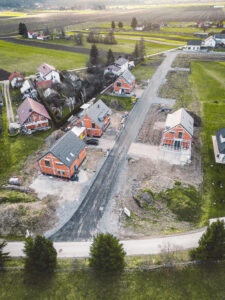
Drone documentation is especially valuable for:
- Roof replacements and structural repairs
- Large residential or multi-unit properties
- Commercial construction sites
- Developments with limited ground access
- Projects requiring insurance or compliance records
From an aerial perspective, stakeholders can see how work fits into the larger environment. This clarity reduces confusion and speeds up decision-making.
How Timelapse Strengthens the Story
While before and after images show outcomes, timelapse documentation shows process.
Timelapse bridges the gap between start and finish by capturing progress consistently over time. It allows teams to review how work unfolded, not just what it looks like at the end.
Timelapse documentation supports accountability by showing how work unfolds from start to finish rather than relying on isolated snapshots. When paired with aerial visuals, it gives stakeholders a clearer understanding of sequencing, scale, and momentum throughout the build, similar to the approach outlined in Understanding Construction Progress with Clear Drone Insights.
This is especially important for:
- Long-term construction projects
- Phased developments
- Projects involving multiple contractors
- Sites with changing conditions
Timelapse documentation supports accountability. It provides context when questions arise about timing, sequencing, or site access. It also becomes a valuable internal and external reference long after the project is complete.
Insurance and Risk Documentation
One of the most overlooked benefits of before and after construction documentation is risk protection.
Insurance adjusters and claims professionals rely on clear visual evidence. When documentation is incomplete or inconsistent, claims take longer to resolve and disputes become more likely.
Drone documentation and structured photography help establish:
- Pre-existing conditions
- Damage progression
- Work completed within scope
- Environmental or external factors
This level of documentation reduces ambiguity. It allows insurance professionals to evaluate claims with confidence and helps property owners avoid unnecessary friction during the process.
Real Estate and Investment Use Cases
For real estate investors and property managers, before and after documentation is not just operational. It is strategic.
Accurate documentation supports:
- Property valuation
- Renovation planning
- Investor reporting
- Marketing transparency
- Portfolio comparisons
Real estate drone photography adds an additional layer by showcasing property context, location advantages, and structural improvements in a way that ground photography cannot.
When investors can see transformation clearly, trust increases. When trust increases, decisions move faster.
Architectural and Design Alignment
Architects and designers rely on precision. Before and after documentation provides a visual reference that supports design intent and validates execution.
Clear documentation helps answer questions such as:
- Did the build align with the original design vision
- How did materials and layout perform in real conditions
- What lessons can be applied to future projects
Aerial and ground documentation together create a complete record that benefits both creative and technical teams.
Why This Matters for Local Projects
Construction environments in Los Angeles County and Orange County are complex. Dense neighborhoods, coastal conditions, limited access points, and strict regulations create challenges that require careful documentation.
Drone documentation allows teams to:
- Capture conditions without disrupting sites
- Document progress in hard-to-reach areas
- Maintain consistency across project phases
- Communicate clearly with off-site stakeholders
Local projects benefit most when documentation is proactive rather than reactive.
Documentation Over Promotion
Effective before and after construction documentation is not about marketing. It is about truth.
When documentation is accurate, it naturally supports storytelling. It shows progress without exaggeration. It builds credibility without selling.
This approach aligns with how professionals actually use visual records. As tools for clarity. As references for decisions. As safeguards for accountability.
That is why documentation continues to grow in importance across construction, real estate, and insurance industries.
Setting the Standard for Future Projects
Every project sets a precedent. The way documentation is handled today influences how confidently future work is approached.
By establishing a clear baseline through before and after construction photography, drone documentation, and timelapse tracking, teams create a foundation that supports better outcomes.
Clear documentation reduces misunderstandings. It shortens approval cycles. It protects stakeholders. Most importantly, it creates alignment across everyone involved in the project.
For organizations like Stone Harbor Media Group, this approach reflects a commitment to clarity, accuracy, and long-term value rather than short-term promotion.